She Sent Her Shower Water to a Lab. The Result Changed How Her Whole Family Showers.
She filtered every glass of water her kids drank. Then she found out where the real exposure was coming from.
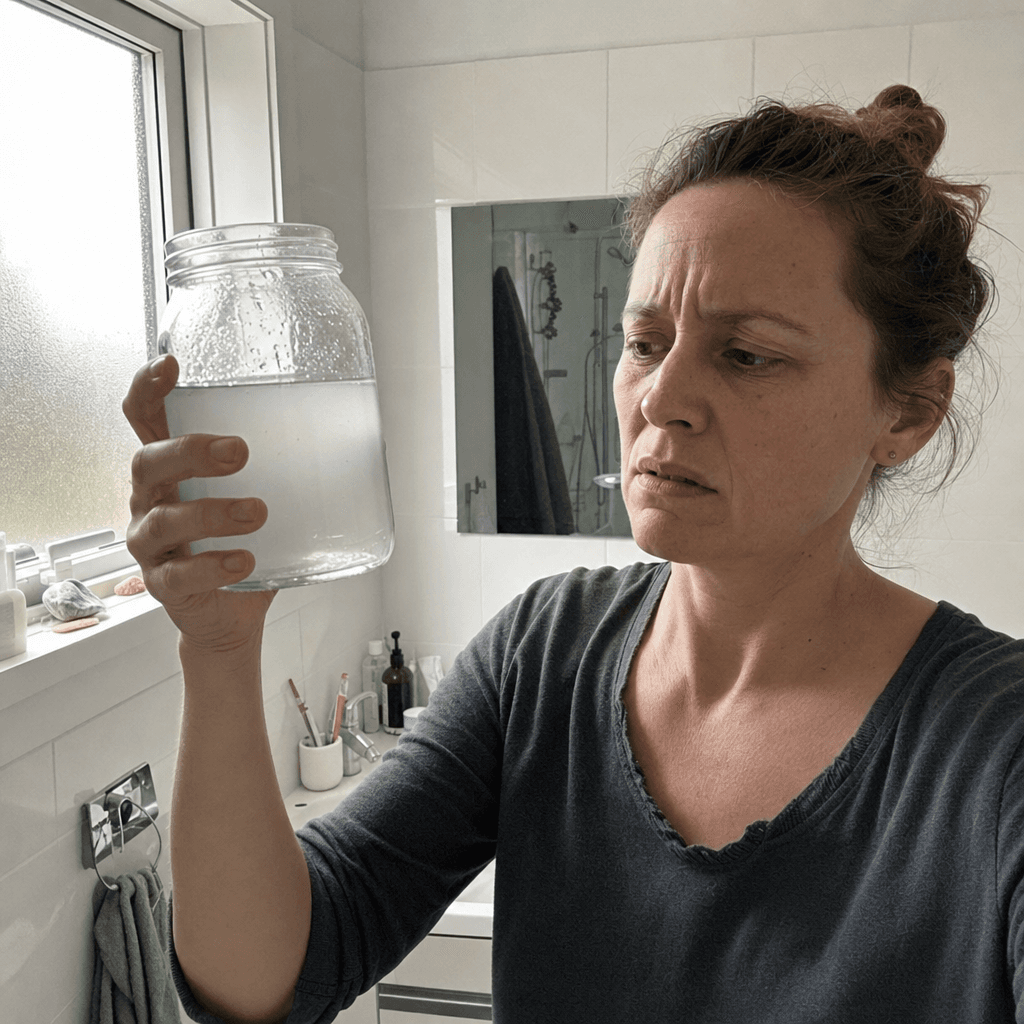
It started with a smell she couldn’t place. A faintly chemical edge to the steam every morning — the kind you stop noticing until, one day, you do.
Hannah, a 38-year-old mum of two, had spent a small fortune on her family’s health. A filter jug for drinking water. Organic everything. So when her youngest kept getting dry, itchy patches after every bath, she did the one thing most of us never think to do.
She tested her shower water.
What came back stopped her cold
We’re told to worry about what we drink. Almost no one talks about what we shower in. Yet your skin — your body’s largest organ — sits under that water for 8, 10, sometimes 15 minutes a day.
Do the maths she did: you filter the two litres you drink. Then you stand, pores open, in roughly sixty litres you don’t — twice a day, every day.
And it isn’t clean. A widely reported independent analysis of tap water across developed countries found microscopic plastic fibres in an estimated 94% of US samples — shed from pipes, packaging and the environment, small enough to pass straight through municipal treatment.
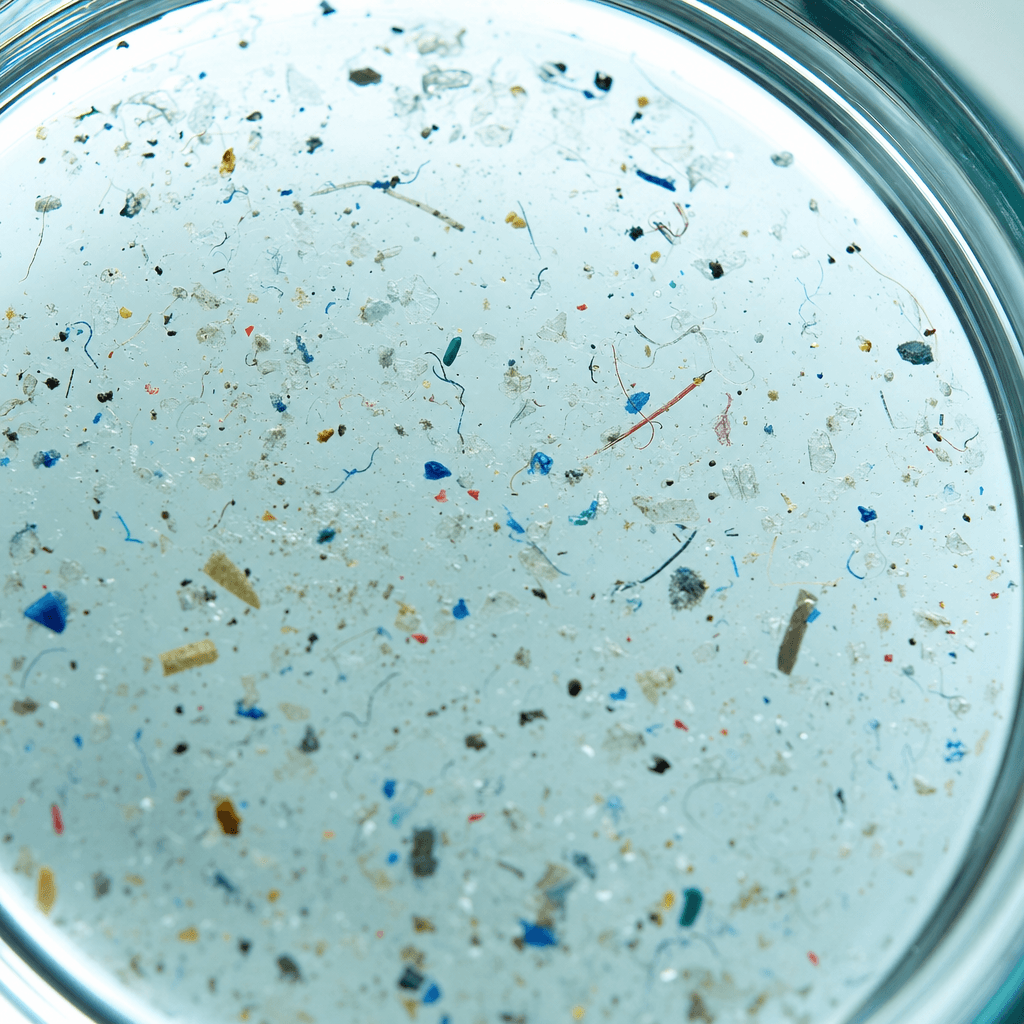
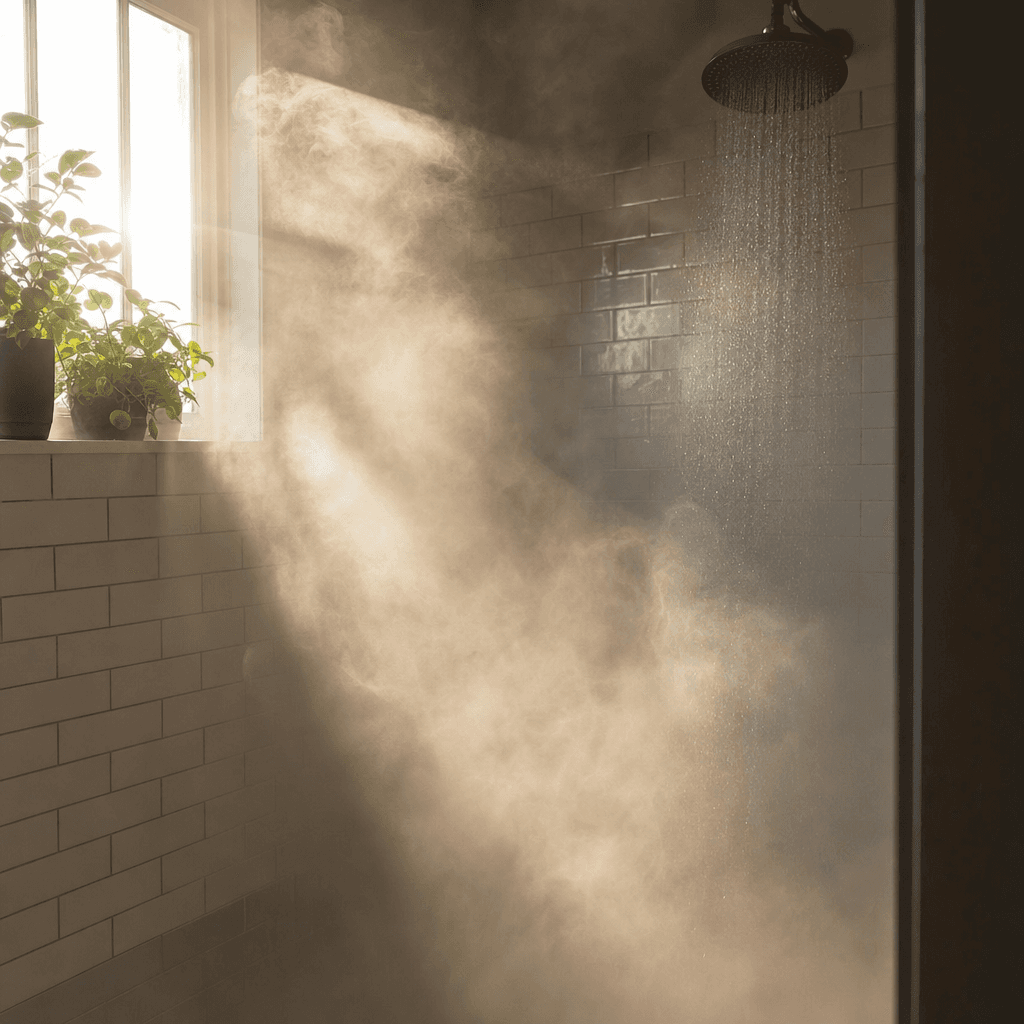
Here’s the part that made Hannah angry, and it should make you angry too: none of this breaks the rules. “Within safe limits” was written decades ago — before anyone was testing water for plastic. Municipal treatment does its job: it kills bacteria, mostly with chlorine. It was simply never designed to take out microplastics — or the chlorine it adds along the way. In a hot shower, the heat carries both into the steam you breathe.
“You shouldn’t have to filter your own shower. The fact that you do made me furious. But I’d rather be furious with a filter on than furious without one.”
Hannah R. — as told to Health & Home
The fix wasn’t what she expected
Her first instinct was a whole-house filtration system — thousands of dollars and a plumber. Then she found that the heaviest exposure happens at one place: the shower head. And that almost every ‘shower filter’ on the shelf is a carbon filter built decades ago for one job — chlorine. Catching plastic was never in the design spec.
That search led her to PureFlow™— a chrome inline filter that screws on between your shower arm and your existing head in about 60 seconds, no tools, no plumber. It isn’t a water softener and doesn’t claim to be. It’s built for one thing the others ignore: what today’s water actually carries.
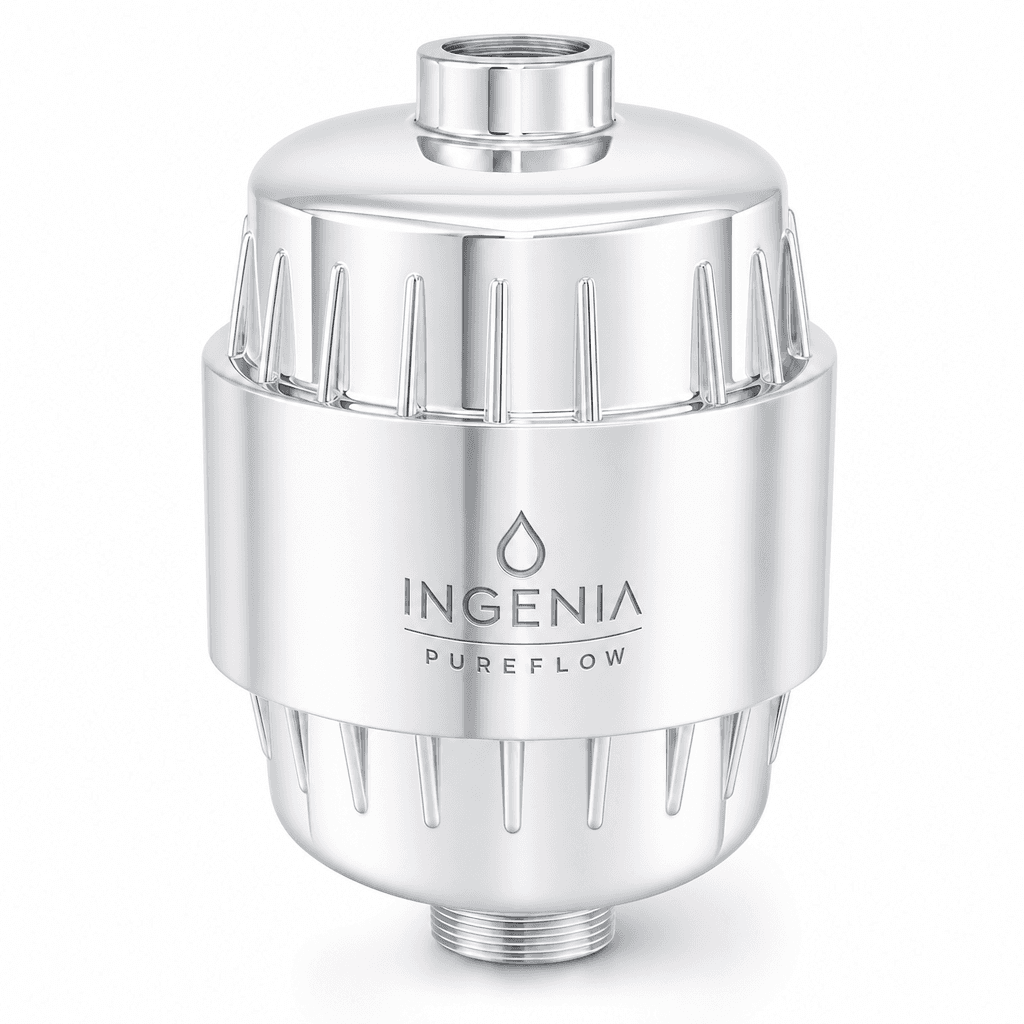
Three stages, in the order the water meets them:
- 01Stainless-steel mesh — traps rust, grit and larger particles.
- 02KDF-55 copper-zinc media — neutralises chlorine and pulls out heavy metals.
- 03Sub-micron fibre barrier — the stage engineered for plastic: an ultra-fine matrix that captures microplastic fragments and synthetic fibres far smaller than a human hair.
Hannah’s first objection was the obvious one — the same one everybody asks: isn’t a plastic filter catching plastic a bit absurd? Fair question. Here the first two stages are metal — stainless-steel mesh, then copper-zinc alloy. This is not another plastic pitcher.
60-second install · 90-day Dirty-Cartridge Guarantee
Then she saw the cartridge
Filtration claims are easy to make. Hannah is an evidence person. So after three months, she unscrewed the housing and pulled the spent cartridge out next to a fresh one.
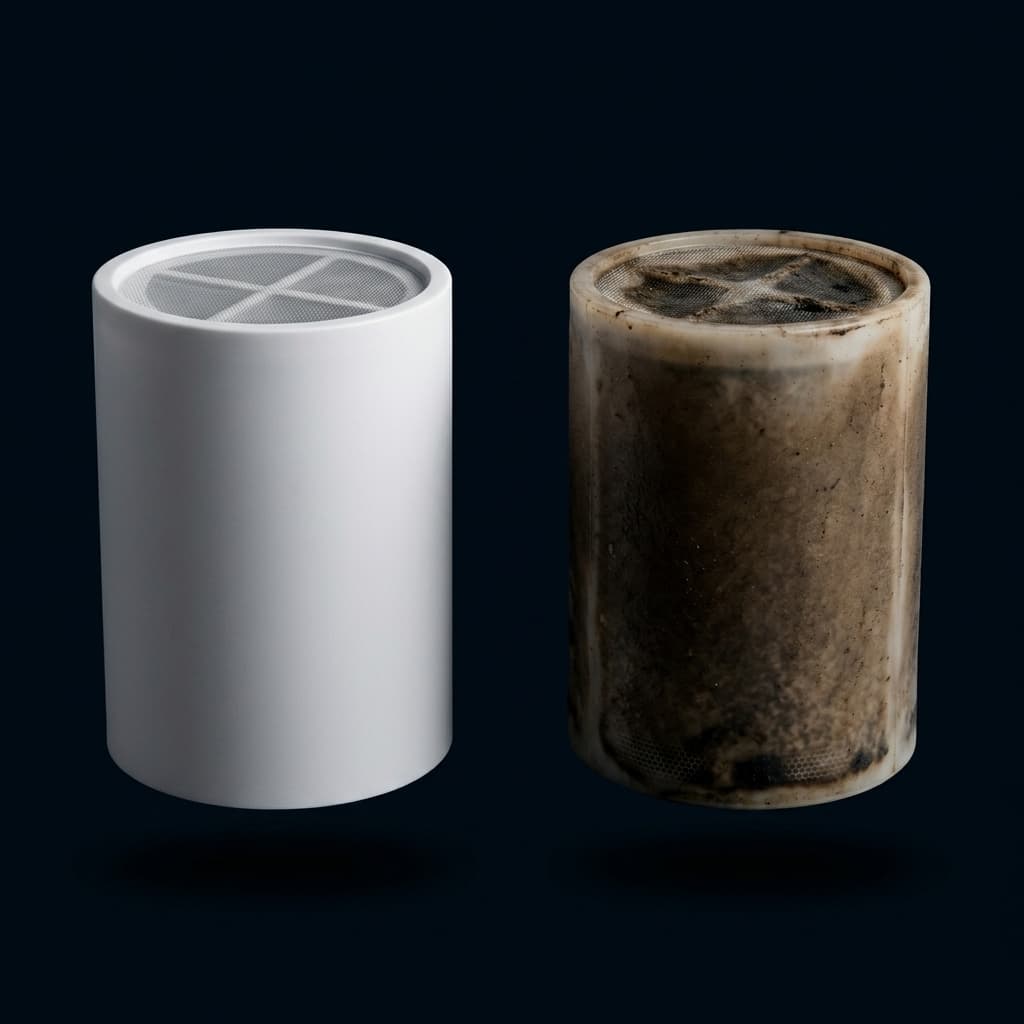
“That brown-grey sludge,” she said quietly, “was going onto my children’s skin. Every single day. That was the moment I bought one for every shower in the house and three for my mother.”
That saturated cartridge is also why the protection is per-cartridge: the media fills up becauseit’s working. A swap takes a minute, about every 90 days — which is why most families keep a spare or two on the shelf.
What changed in two weeks
She didn’t expect to feel a difference. She did. Her own skin stopped feeling tight after a shower. Her hair, she swears, holds its shine longer. The water pressure, she made a point of checking, stayed exactly where it was.
“I’m not claiming a miracle. I’m saying I stopped rinsing my family in chlorine and plastic — and I can feel the difference on my own skin every morning.”
Hannah R. — as told to Health & Home
PureFlow is $89.99with the first 90-day cartridge included — a one-time fix that costs less than a single month of most families’ filtered-drinking-water habit. Most families take the Filter + 2 Cartridges kit at $109.99: nine months of filtered showers, with the spare cartridges at well under the single-refill price.
The 90-day Dirty-Cartridge Guarantee
Use it for 90 days. If your cartridge isn’t visibly darker with everything it caught — and your skin and hair don’t feel the difference — send it back for a full refund. No questions asked.
From $89.99 · 90-day Dirty-Cartridge Guarantee
This is an advertisement and not an actual news article, blog, or consumer-protection update. The story depicted is illustrative. PureFlow™ is a water-filtration device and is not intended to diagnose, treat, cure, or prevent any disease. Individual results vary. Microplastic statistics reference published independent water-quality studies.